A talking head is the easiest video to film and the easiest to get wrong. This guide gives you the 6 parts, in order, with the seconds for each, and a prompt that writes it for you.
Open for .
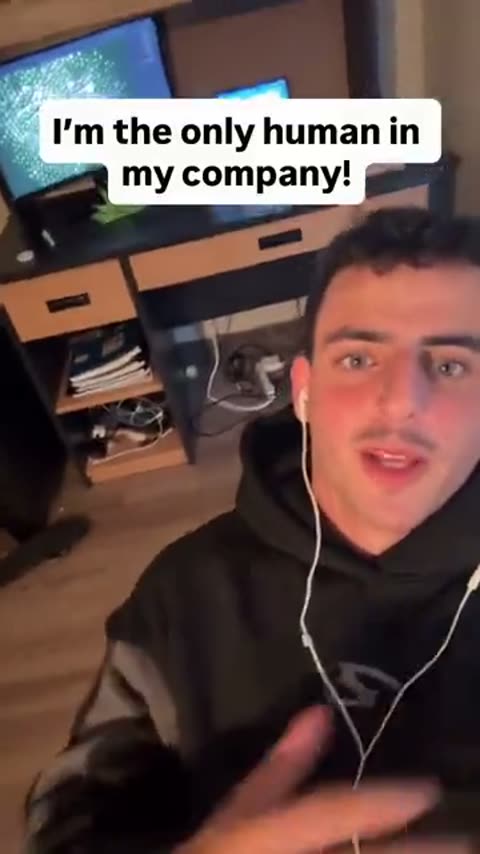
When people see your face and hear you explain something clearly, they start to trust you. That's why talking heads bring in followers and buyers, even when they get fewer views than a trend.
The problem is most people just start talking. They warm up, give background, wander, then trail off. A simple shape fixes that. Six parts, in order, each with one job. Once you know it, every script takes 5 minutes.
Enter your email and it opens right here. So do the other 18 guides. You only do this once.
Here's the whole video, start to finish, for a 30 to 45 second talking head:
Two hook shapes do most of the work on talking heads:
Skip alarm hooks like "Your business is behind!" and question hooks like "Are you doing this?" People don't share videos that make them feel bad, and questions are easy to answer "no" to and scroll.
Paste this into ChatGPT or Claude. If you made a voice profile in guide 3, paste it in too.
Write a 30 to 45 second talking-head video script for my business.

Topic: [YOUR ONE IDEA]
Who it's for: [YOUR IDEAL CUSTOMER]
A real story or example I can use: [A REAL CUSTOMER MOMENT OR SOMETHING FROM YOUR WORK]
What I want them to do at the end: [FOLLOW, OR COMMENT A WORD]
How I talk: [PASTE YOUR VOICE PROFILE, OR DESCRIBE IT IN ONE LINE]

Use this exact structure and label each part:
1. Hook (under 12 words). A surprising claim about me or my business, or a reframe of something my customer believes. No questions. No alarm.
2. Problem (1 to 2 short lines). Use words my customer would use.
3. The turn (1 to 2 lines). What most people miss.
4. Proof or example (2 to 4 lines). Use my real story. Don't invent numbers.
5. Payoff (1 to 2 lines). One thing they can do today.
6. Call to action (1 line). Soft. One ask only.

Rules: sentences of 5 to 9 words. First person. Plain words. No pitch in the middle. No hype words. No dashes. Write it the way I'd say it out loud.
In editing: start talking on frame one, cut every gap so your lines touch, and put a short line of text at the top (7 words or fewer) that says the hook.
A made-up example for a roofing company, so you can see the shape.
Our AI content team does this step for clients: scripts in your voice. See how
The formula makes each script easy. What it doesn't do is come up with the idea, pull the real story, write it, check it, and line up the next one, every single day. That's where most people go back to winging it.
Liked this? It's one of the jobs our AI content team does for clients.
P.S. If you'd rather film and approve while we do the rest, the application takes about 2 minutes.
 Attention OS